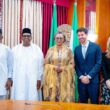


The Chairman of the House of Representatives Committee on Finance and Member representing Ikeja Federal Constituency, Rt. Hon. James Abiodun Faleke, has stressed that increased revenue generation alone cannot guarantee national development without prudent allocation, effective oversight and fiscal discipline.
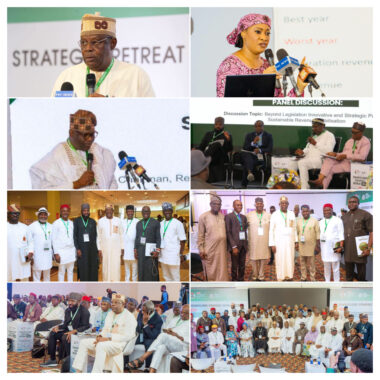
Faleke made the assertion at the Strategic Stakeholders’ Retreat jointly organised by the House Committee on Finance and the Revenue Mobilisation, Allocation and Fiscal Commission (RMAFC) at the Sheraton Hotel, Ikeja, Lagos.
The retreat, themed “Beyond Collection: Revenue Mobilisation for Economic Growth – Building Strategies for Efficient Resource Allocation,” brought together key stakeholders to deliberate on strategies for strengthening Nigeria’s fiscal management system and ensuring that public resources translate into tangible development outcomes.
Commending RMAFC for convening the retreat, Faleke described the initiative as one that aligns with President Bola Ahmed Tinubu’s Renewed Hope Agenda, noting that efficient management of public funds remains critical to delivering meaningful benefits to citizens.
“Revenue, on its own, does not build roads, equip hospitals or improve the lives of our people. It is prudent allocation, effective oversight and fiscal discipline that transform public resources into tangible development outcomes. Our responsibility is to ensure that every naira works for the Nigerian people,” Faleke said.
He urged participants to put forward practical recommendations that would strengthen legislative oversight, improve financial management and ensure that public resources are effectively utilised for the benefit of Nigerians.
The retreat also provided members of the House Committee on Finance with an opportunity to examine the significant rise in revenue accruing to sub-national governments and evaluate the impact of such allocations on governance, infrastructure and socio-economic development.
Stakeholders unanimously agreed on the need to deepen collaboration with State Houses of Assembly to strengthen oversight mechanisms, promote accountability and ensure efficient allocation and utilisation of public resources across all tiers of government.
Speaking on behalf of RMAFC Chairman, Dr. Mohammed Bello Shehu, the Federal Commissioner representing Oyo State, Kolade Daniel Abimbola, said Nigeria must move beyond a revenue-generation mindset and place greater emphasis on efficient allocation, transparency and accountability to achieve sustainable economic growth.
Abimbola described the retreat as a timely platform to assess the nation’s evolving fiscal landscape and develop practical solutions for improving domestic revenue mobilisation and resource allocation.
While acknowledging progress in boosting non-oil revenue through reforms, stronger institutions and digital innovations, he maintained that greater efforts were still required to improve tax compliance, curb revenue leakages and enhance inter-agency collaboration.
“The conversation must now move beyond simply collecting revenue. Every naira mobilised must be efficiently allocated, prudently managed, transparently accounted for and strategically invested in sectors that stimulate economic growth, create jobs and improve the welfare of Nigerians. That is the pathway to sustainable national development,” he said.
Abimbola reiterated RMAFC’s constitutional responsibility to monitor accruals and disbursements from the Federation Account, review revenue allocation formulas and advise governments on fiscal efficiency.
He also called for stronger collaboration among fiscal institutions, the National Assembly, state governments and the private sector, adding that emerging technologies such as artificial intelligence, data analytics and digital monitoring systems could significantly improve transparency, reduce leakages and support evidence-based fiscal decisions.
He expressed confidence that the retreat would produce actionable recommendations capable of strengthening Nigeria’s fiscal framework, promoting accountability and driving long-term economic growth.