



The organisation made the demand in an open letter dated August 8, 2026, signed by its Deputy Director, Kolawole Oluwadare.
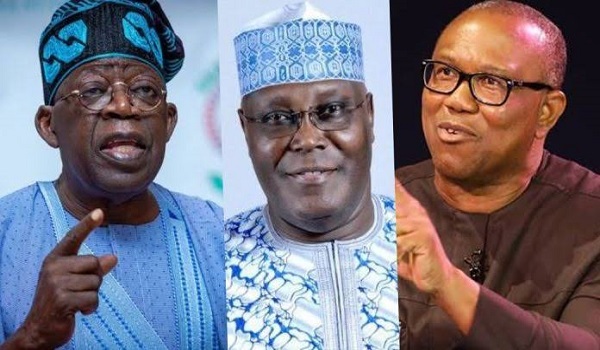
Among those listed by SERAP are President Bola Tinubu of the All Progressives Congress (APC), Atiku Abubakar of the African Democratic Congress (ADC), Peter Obi of the New Democratic Congress (NDC), Sandy Onor of the Peoples Democratic Party (PDP), Omoyele Sowore of the African Action Congress (AAC), Donald Duke of the Peoples Redemption Party (PRP), and Seyi Makinde of the Accord Party Movement (APM).
Others are Okwori Ada Elizabeth Frederick of the National Democratic Party (NDP), Chukwu Anita Zugwai of the Young Progressive Party (YPP), Rufai Adekunle Omoaje of the Action Alliance (AA), Adenuga Sunday of the Boot Party, Memeh Samuel of the Democratic Leadership Alliance (DLA), Nwanyanwu Daniel Danerechukwu of the Zenith Labour Party (ZLP), Okereke Sunday Chibuzor of the Labour Party (LP), Okereke Iken Esther of the National Rescue Movement (NRM), Abbas-Bin Aliyu of the Action Democratic Party (ADP), Dikwa Suleiman Mohammed of the New Nigeria Peoples Party (NNPP), and Adebayo Adewole Ebenezer of the Social Democratic PSearch Formsarty (SDP)
SERAP urged the candidates to go beyond what is legally required and voluntarily adopt higher standards of transparency, accountability and integrity in their quest for Nigeria’s highest elected office.
The organisation argued that candidates seeking power over public finances, natural resources, appointments and security institutions should be prepared to subject their personal financial affairs to reasonable public scrutiny before asking Nigerians for their votes.
“Nigeria’s democracy belongs to its citizens. Votes must not be bought. Public office must not be treated as private property,” SERAP said.
It added that Nigerians should be able to choose their next president based on “policies, competence, integrity, character and their vision for Nigeria,” rather than on which candidate could spend the most money.
According to the organisation, voluntary pre-election asset disclosure would help voters identify potential conflicts of interest and significant sources of wealth, while providing a baseline for monitoring changes in a candidate’s assets if elected.
SERAP maintained that although the 1999 Constitution, as amended, does not expressly compel presidential candidates to publicly release their asset declarations before an election, its broader provisions embody principles of transparency, accountability and integrity in public office.
It noted that the Constitution already requires elected public officers, including the President, to declare their assets and liabilities.
The organisation cited Paragraph 11 of Part I of the Fifth Schedule, which requires public officers to submit declarations of their properties, assets and liabilities, including those of unmarried children below 18.
It also referred to Section 140(1), which requires a person elected President to make the prescribed declaration before assuming the functions of office.
SERAP further invoked Article 25 of the International Covenant on Civil and Political Rights, arguing that citizens cannot meaningfully exercise their right to participate in public affairs and vote in genuine elections if they lack relevant information about those seeking to govern them.
The organisation also raised concerns over the continued use of money, gifts and other inducements to influence voters ahead of elections.
“An election in which citizens’ votes are purchased, coerced or otherwise financially induced cannot genuinely reflect the free political will of the Nigerian people,” it said.
SERAP cited Section 14(2)(a) of the Constitution, which provides that sovereignty belongs to the people of Nigeria, and Section 125 of the Electoral Act 2026, which criminalises bribery and related conduct intended to procure the return of a candidate or the vote of an elector.
It warned that vote-buying is particularly damaging in an environment of poverty and economic hardship because it exploits voters’ economic vulnerability and risks turning a constitutional political right into a financial transaction.
The organisation therefore urged all 19 presidential candidates to publish their assets and liabilities before the election, disclose the legitimate sources of significant assets and commit to updating their declarations if elected.
It also asked the candidates to publicly reject vote-buying and electoral bribery, including activities carried out through their campaign organisations, agents, supporters and political associates.
SERAP further called on the candidates to instruct their campaign teams and associates not to distribute money, gifts, food, transportation benefits or other material inducements in exchange for votes.
The organisation urged candidates to report credible cases of vote-buying involving their campaign organisations to the appropriate authorities and sign a public integrity pledge committing themselves, their parties and campaign organisations to peaceful, transparent, accountable and corruption-free elections.
“The choice before Nigerians in 2027 should be a choice based on ideas, policies, competence and integrity, not on who can spend the most money or conceal the most wealth,” SERAP said.


