




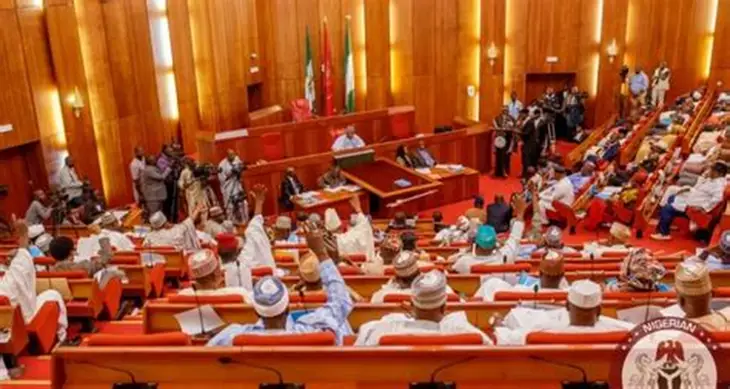
For the fourth time, the Senate has amended the 2025 Appropriation Act (Repeal and Re-enactment) to extend the implementation of the capital component of the 2025 budget from September 30 to December 31, 2026.
The resolution followed a motion moved by the Senate Leader, Senator Opeyemi Bamidele, after an executive session and clause-by-clause consideration at the Committee of Supply.
Bamidele said the extension would provide an administrative window to fully implement capital projects for which funds had already been released and ensure the completion of critical national projects already at advanced stages of completion.
The Senate Leader said the extension was also aimed at sustaining economic activity, supporting local contractors, facilitating the efficient utilisation of released funds, boosting overall budget performance and enhancing public service delivery.
He further clarified that the bill does not seek to introduce new projects, adding that the extension should not be interpreted as a relaxation of fiscal accountability but as a measure strictly in accordance with the Fiscal Responsibility Act.
The implementation period, which was initially billed to end in December 2025, had earlier been extended to March 31, 2026, then to June 30, 2026, and later to September 30, 2026.
With the latest resolution, the validity period will now run until December 31, 2026.
This is the fourth time the 2025 budget has been extended, despite President Bola Tinubu’s earlier pledge to streamline Nigeria’s budgeting system and eliminate concurrent and overlapping fiscal cycles.
Defending the move during the debate, the Deputy Senate President noted that the extension was necessary to ensure that the current administration does not leave any project, including those inherited from the Peoples Democratic Party (PDP), uncompleted.
Meanwhile, the House of Representatives has also extended the implementation period for the capital component of the 2025 Appropriation Act from September 30, 2026, to December 31, 2026.
The extension followed an executive request submitted to the National Assembly by President Bola Tinubu, seeking additional time to allow ministries, departments and agencies (MDAs) to complete critical infrastructure projects and capital expenditures captured under the 2025 fiscal framework.
The latest extension is part of a series of timeline adjustments to the 2025 budget. The National Assembly initially extended the capital implementation period from its original expiration date of December 31, 2025, to March 31, 2026.
The deadline was subsequently extended to June 30, 2026, and then to September 30, 2026, before the latest extension to December 31, 2026.
Lawmakers passed the amendment bill through accelerated readings during plenary, emphasising that the decision aims to prevent the abandonment of ongoing capital projects across the country due to funding bottlenecks.
With the legislative approval, federal government agencies will have until December 31, 2026, to fully disburse and execute capital allocations under the 2025 budget framework.


