

OSUN 2026: HOW APC HANDED VICTORY TO ADELEKE — AND WHY THE REAL VICTORY MUST NOW BE PEACE
By Tayo Matthew Aderinola
The outcome of the 2026 Osun State Governorship Election deserves more than the usual post-election celebration, recrimination and blame game. Beyond the statistics, political alignments and party colours lies a more profound question: what went wrong for the All Progressives Congress (APC), and what lessons can the party—and indeed Nigeria—learn from the outcome?
In my candid assessment, APC did not lose simply because Governor Ademola Adeleke was too strong an opponent. The party’s defeat was, to a considerable extent, the consequence of a series of avoidable political decisions, internal disagreements and strategic miscalculations.
The painful irony is that some of the conditions that ultimately worked in Adeleke’s favour may have been created by the very people who were expected to defeat him.
The First Strategic Mistake: Closing the Door on Adeleke
Perhaps the most consequential decision was the refusal to open the APC’s door to Adeleke when the possibility of his joining the party arose.
The argument that he should not be admitted because he was considered capable of defeating the party is, in my view, a classic example of political short-sightedness. In modern politics, strength should not necessarily be feared; it should be negotiated, accommodated and, where possible, converted into political capital.
Politics is about numbers.
Politics is about alliances.
Politics is about building coalitions.
Politics is about bringing people together.
Had Adeleke been welcomed into APC and an acceptable political arrangement reached, the party might have transformed a potential opponent into a political ally. Such an arrangement could have been a win-win—not only for Adeleke and Osun APC, but potentially for President Bola Ahmed Tinubu and the broader APC family ahead of the 2027 presidential election.
Instead, the party chose exclusion.
And politics, as Osun has demonstrated once again, can be unforgiving when strategic opportunities are ignored.
When Internal Politics Becomes an Electoral Liability
The second major issue was the governorship primary and the emergence of the APC candidate.
The perception of imposition created another layer of dissatisfaction within the party. In politics, winning a primary is only the beginning. A candidate also needs the commitment of those who contested against him, their supporters, their structures and their networks.
Where reconciliation fails, the consequences can be significant.
Consider Senator Iyiola Omisore.
I am not suggesting that Senator Omisore worked against APC, nor am I making an allegation of sabotage. Without evidence, such claims would be unfair and irresponsible.
My argument is much simpler.
A political stakeholder who feels unfairly treated during a primary may not subsequently mobilise with the same enthusiasm, energy and personal commitment that would have been expected had he felt respected and properly accommodated.
That distinction matters.
A governorship election is not won by posters, billboards, rallies and social media campaigns alone. It requires an effective political machine operating at ward, polling-unit and community levels.
Every influential stakeholder matters.
Every former aspirant matters.
Every grassroots leader matters.
Every political structure matters.
When these structures are alienated, the party’s machinery inevitably becomes weaker.
Ife: A Warning APC Must Not Ignore
The outcome in Ife should particularly concern the APC leadership.
Ife was expected to be a significant political battleground, especially considering the political influence associated with some of the party’s prominent stakeholders in the area. Yet Adeleke was able to secure victory there.
That result should prompt serious reflection within APC.
What went wrong?
Why was the party unable to fully harness the strength of its political heavyweights?
Were all the stakeholders sufficiently engaged?
Were aggrieved members genuinely reconciled?
Did the party’s leadership listen enough to its grassroots?
These are difficult questions, but they must be asked.
The worst response would be to blame everyone except those who made the strategic decisions.
The Lesson for APC
APC must learn from Osun.
The party needs genuine reconciliation, broader consultation, respect for internal democracy and a deliberate strategy for accommodating influential political forces.
Imposition may produce a candidate, but only unity produces a winning political machine.
The party must also understand that political strength cannot be manufactured overnight. It is built through years of relationships, trust, sacrifice and grassroots mobilisation.
Those relationships must therefore be protected.
A Message for President Tinubu
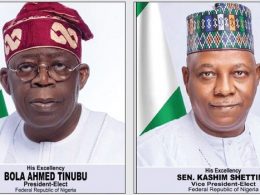
For President Bola Ahmed Tinubu, I believe the statesmanlike response to the outcome is to publicly congratulate Governor Ademola Adeleke on his victory.
The election is over. The people have spoken. Democracy demands that the winner be acknowledged.
Such a gesture would not diminish the APC or the President. On the contrary, it would demonstrate confidence, maturity and statesmanship.
Beyond the congratulatory message, the Presidency should keep the door open for constructive engagement with Governor Adeleke.
If, as reportedly stated during his campaign, Adeleke remains committed to supporting President Tinubu’s second-term ambition, this is an opportunity for him to demonstrate that commitment.
Politics is rarely permanent.
Today’s adversary can become tomorrow’s partner.
And tomorrow’s partner can become the bridge to a broader political coalition.
The Bigger Picture Is 2027
The bigger political objective should now be 2027.
If APC wants to retain the Presidency, it must recognise that every state matters and every credible political alliance counts.
Osun should therefore be treated as a wake-up call.
Never allow internal arrogance, exclusion, poor consultation and inadequate reconciliation to do the opposition’s job for them.
The party must look inward, correct its mistakes and rebuild before the next electoral battle.
APC did not merely lose Osun.
In my view, the party created some of the conditions that made its defeat possible.
But the story should not end there.
The Election Is Over—Now Let Osun Heal
Beyond the question of who won and who lost, there is an even more painful issue that must not be forgotten: the loss of lives associated with the election.
No election is worth the blood of our people.
No political ambition is worth the death of a father, mother, son, daughter, brother or sister.
Political victories are temporary. The pain of losing a loved one is permanent.
This is why the post-election conversation must move beyond political victory and defeat to healing, reconciliation and peace.
I believe APC, rather than waiting for others, should take the initiative and lead the way.
One practical step would be the establishment of a Memorial Wall in Osogbo dedicated to the everlasting memory of those who lost their lives in connection with the 2026 Osun Governorship Election.
Such a memorial would transcend party politics. It would become a solemn reminder to politicians, political parties and future generations that democracy must never become a pathway to bloodshed.
But the healing must go beyond a monument.
A Reconciliation Committee Is Imperative
A high-powered Osun 2026 Governorship Election Reconciliation Committee should be constituted to bring together Governor Ademola Adeleke, APC leaders, aspirants, candidates, aggrieved stakeholders and representatives of the various political interests that participated in the election.
The committee should not be established merely for political optics.
It should pursue genuine reconciliation, rebuild relationships, identify the causes of political tension and recommend practical measures to prevent violence in future elections.
Where credible allegations of wrongdoing exist, they should be properly investigated and addressed through lawful and transparent processes.
This should be a reconciliation process for everyone—not just APC.
Governor Adeleke, having secured the mandate of the people, also has an opportunity to become the Governor of reconciliation, not merely the Governor of those who voted for him.
His victory should therefore be used to unite Osun rather than deepen existing political divisions.
APC Must Reform From Within
For APC, the lessons must go beyond Osun 2026.
Internal democracy must be strengthened.
Aspirants must be treated fairly.
Stakeholders must be consulted.
Aggrieved members must be reconciled before elections—not after defeat.
And political opponents must ultimately be seen as fellow citizens first and competitors second.
The party must rebuild its structures from the polling unit upward, restore confidence among its members and develop a culture where political differences do not automatically become permanent hostility.
Let Osun Become a Model for Political Healing
Osun needs healing.
Nigeria needs healing.
The 2026 election should not be remembered only for who won the Government House or which party suffered defeat. It should also be remembered as the moment when political leaders decided that the cost of democracy must never again be measured in human lives.
Let the proposed Memorial Wall in Osogbo stand as a permanent reminder of the price already paid.
Let the Reconciliation Committee become a bridge between political opponents.
Let APC use its defeat as an opportunity for introspection and renewal.
Let Governor Adeleke use his victory to build bridges across party lines.
And let President Tinubu demonstrate statesmanship by extending a hand of congratulations and constructive engagement.
Because ultimately, the greatest victory after Osun 2026 should not be APC’s victory or Adeleke’s victory.
The greatest victory should be a peaceful Osun where political disagreements are settled through the ballot—not the bullet; where no family loses a loved one because of an election; and where democracy delivers competition without bloodshed.
Osun has voted. The contest is over. Now, let the healing begin.