

Nigeria’s energy story entered a decisive new phase on Wednesday, as the Nigerian National Petroleum Company Limited (NNPC), said that national crude oil output climbed from a low of 960,000 barrels per day in 2022 to an average of 1.71 million barrels per day, with a peak of 1.84 million barrels per day in 2025.
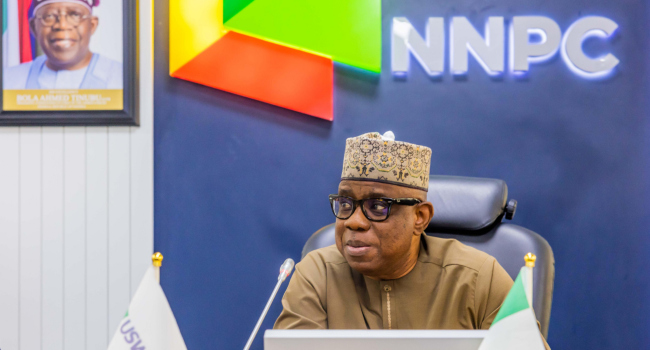
Group Chief Executive Officer of NNPC Ltd, Bashir Bayo Ojulari, disclosed at the Parliamentary Roundtable on the State of Pipeline Security, which was held at the National Assembly, in Abuja, according to a statement by the company’s Chief Corporate Communications Officer, Andy Odeh.
Speaking on the success of the security arrangement, Ojulari explained that it was not accidental, and that it involved an “integrated energy security model that combines legislative and executive policy alignment, actionable intelligence, kinetic deployment capabilities, regulatory oversight, industry cooperation, and community‑embedded surveillance mechanisms”.
He said the resurgence of production due to the effective tackling of the twin menace of oil theft and pervasive pipeline sabotage has led to the restoration of investors’ confidence in the nation’s oil and gas sector.
In his welcome address, the President of the Senate, Sen. Godswill Akpabio, represented by Senator Jimoh Ibrahim, called for collaboration among agencies and stakeholders in resolving all challenges impeding production growth.
On his part, the Speaker of the House of Representatives, who was represented by the Leader of the House, Hon. (Prof.) Julius Ihonvbere urged the forum to evaluate the progress made so far with a view to ensuring fairness and equity.
The Parliamentary Roundtable on the State of Pipeline Security was convened by the Joint Senate and House of Representatives Committee on Petroleum Resources.
It had in attendance the Senate President, Speaker of the House of Representatives, National Security Adviser, Minister of Defence, and representatives of oil industry regulatory agencies.
The Roundtable also featured presentations by the Chief of Defence Staff, Inspector General of Police, Director General of the Department of State Services, Commandant General of the Nigerian Security and Civil Defence Corps, and private security companies.
The NNPCL’s announcement came as Africa’s richest man, Aliko Dangote, on Tuesday said that crude deliveries from the NNPC to the Dangote Petroleum Refinery doubled in March.
“Last month, they gave us six cargoes for naira and four cargoes for dollars,” Dangote said during a visit by UN Deputy Secretary-General Amina Mohammed to the facility, referring to the 10 cargoes supplied in March to support domestic fuel production.
Despite the progress, challenges remain as Dangote noted that the refinery still requires 19 cargoes for optimal operations, forcing it to import crude from the United States and other African producers to bridge the gap.
He also raised concerns about international oil companies operating in Nigeria, stating that their preference for selling crude to traders leads to higher repurchase costs for the refinery, with broader implications for fuel pricing.
To address this, the refinery is seeking greater access to locally priced crude under naira-based arrangements, a move aimed at moderating costs and strengthening long-term energy security.