

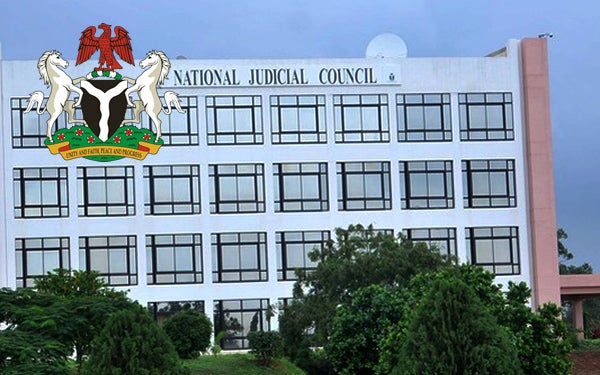
The National Judicial Council (NJC) on Wednesday issued a new policy direction on the handling of political and election-related cases.The new policy, issued at the NJC’s meeting held on Wednesday, gives strict rules to politicians on where they should file their political and election-related cases.
This is contained in a statement issued by Mr Soji Oye, the Director of Information, in Abuja.
The NJC under the Chairmanship of the Chief Justice of Nigeria (CJN) Justice Tanko Muhammad took the decisions at its 98th Meeting held in Abuja.
The council noted that the policy directions was issued in order to remedy the situation of multiplicity of litigations of political suits at different Courts of coordinate jurisdiction across the nation, resulting in conflicting orders on the same issues and facts.
The Directions which is to all the Federal and State Courts read as follows is pursuant to the powers vested in the NJC by the Constitution of the Federal Republic of Nigeria, Schedule III, Part I, 21 (i).
These Policy Directions, the council said, shall apply to all Suits filed in any Court in Nigeria wherein the Parties include Independent National Electoral Commission (INEC), any political party or its officers, any other person, natural or legal, suing or sued for a declaration in relation to any action taken or to compel or restrain any action.
The NJC said the objectives of the policy seeks to prevent the multiplicity of litigations at different Courts of coordinate jurisdiction across the nation, resulting in conflicting orders on the same issues and facts.
Others are to recognise that Courts need to embrace prudential limitations on their powers with a view to curtailing the incidences of unscrupulous forum shopping disrupting the administration of justice and the democratic process.
It also acknowledge that the circumstances necessitate further administrative measures and procedures to complement and support the judicial process.
The NJC said all suits to which these Policy Directions apply shall be filed, received, or entertained only at the High Court of the Federal Capital Territory in so far as the relief sought, or potential consequential order(s) or declaration(s) may restrain or compel persons or actions beyond the territorial jurisdiction of any one State;
Where such suits are within the exclusive jurisdiction of the Federal High Court, the council said, they shall be filed or received at Abuja and assigned by the Chief Judge of the Court;
“Heads of Court shall exercise their rule-making and administrative powers to give effect to these Policy Directions.
“These directions shall take effect from May 11”, the council said.
In a related development, the NJC, considered the list of candidates presented by its Interview Committee and recommended 49 successful candidates for appointment as Heads of Courts and other Judicial Officers in Nigeria.
The Council also received six notifications of retirements and one notification of death from the Federal and State High Courts. (NAN)
Read Full Statement Below:
PRESS RELEASE
11th May 2022
• NJC issues Policy Directions on Political and Election-related cases to Head of Courts Nationwide. To take immediate effect;
• Also recommends the appointment of Forty-nine (49) Judicial Officers
Concerned by the multiplicity of litigations of political suits at different Courts of coordinate jurisdiction across the nation, resulting in conflicting orders on the same issues and facts, the National Judicial Council at its 98thMeeting of 10 and 11 May 2022 under the Chairmanship of The Chief Justice of Nigeria, Honourable Dr. Justice I. T. Muhammad, CFR, issued Policy Directions in order to remedy the situation.
The Directions to all Federal and State Courts reads as follows:
“Pursuant to the powers vested in the National Judicial Council by the Constitution of the Federal Republic of Nigeria, Schedule III, Part I, 21 (i).
These Policy Directions shall apply to all Suits filed in any Court in Nigeria wherein the Parties include Independent National Electoral Commission (INEC), any political party or its officers, any other person, natural or legal, suing or sued for a declaration in relation to any action taken or to compel or restrain any action or omission with respect to the affairs of a political party or any election into a public office.
1. OBJECTIVES AND GUIDING PRINCIPLES
These Directions seek to:
a. Prevent the multiplicity of litigations at different Courts of coordinate jurisdiction across the nation, resulting in conflicting orders on the same issues and facts;
b. Recognise that Courts need to embrace prudential limitations on their powers with a view to curtailing the incidences of unscrupulous forum shopping disrupting the administration of justice and the democratic process; and
c. Acknowledge that the circumstances necessitate further administrative measures and procedures to complement and support the judicial process.
2.DIRECTIONS:
Without prejudice to the powers of Election Petitions, Tribunals constituted pursuant to the provisions of the Constitution of the Federal Republic of Nigeria.
Pending the Constitution of a Cross Jurisdiction Litigation Panel (CJLP) to give directions on appropriate litigation for a for cross-jurisdiction litigations:
a. All suits to which these Policy Directions apply shall be filed, received, or entertained only at the High Court of the Federal Capital Territory in so far as the relief sought, or potential consequential order (s) or declaration (s) may restrain or compel persons or actions beyond the territorial jurisdiction of any one State;
b. Where such suits are within the exclusive jurisdiction of the Federal High Court, they shall be filed or received at Abuja and assigned by the Chief Judge of the Court;
c. All such Suits wherein the cause of action arose in a State and the relief seeks a declaration or to compel or restrain persons (s), natural or legal, within that State’s territory, with no consequence outside the State, shall be filed, received, or heard only in that State;
d. All Heads of Court shall assign cases or constitute panels with a view to forestalling the incidences of conflicting judgements and rulings;
e. Once facts or issues have been ruled upon, no other Court or Panel of Coordinate Jurisdiction shall be assigned or entertain Suits on the same subject matter and parties shall comply or proceed on appeal to the appropriate higher Court;
f. Rules of Court shall require sufficient notice and publicity of actions that potentially impact other cases;
g. Rules of Court shall stipulate solemn disclosure duties on litigants filing actions that may impact other actions.
Heads of Court shall exercise their rule-making and administrative powers to give effect to these Policy Directions.
These directions shall take effect from the 11 May 2022”.
APPOINTMENT OF JUDICIAL OFFICERS
Council also considered the list of candidates presented by its Interview Committee and recommended forty-nine (49) successful candidates for appointment as Heads of Courts and other Judicial Officers in Nigeria.
Council also received Six (6) notifications of retirement and One (1) notification of death from the Federal and State High Courts.
Soji Oye, Esq
Director, Information