






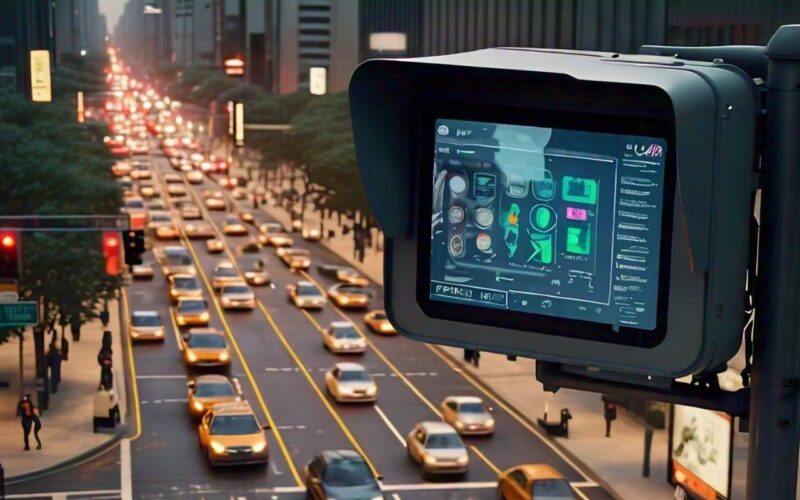
The Lagos Metropolitan Area Transport Authority (LAMATA) has said selected corridors in the state are being equipped with smart traffic infrastructure designed to respond to real-time traffic demand.
Mr Adeyemi Adeniji, Technical Adviser, Public Transport Roads at LAMATA, made this known during a panel session at the IoT West Africa Conference and Data Centre Cloud Expo on Tuesday at Landmark Event Centre, Lagos.
The theme of the panel session, which had experts in the transport and technology sectors was, “AI Enhanced Mobility: Revolutionising Nigeria’s Urban Transport with IoT Integration.”
Adeniji said that implementation of this plan was already underway to address coordination concerns.
The Lagos Metropolitan Area Transport Authority (LAMATA) is the Lagos State Government Agency created to coordinate transport planning, policies, and public transport infrastructure implementation in the Lagos Metropolitan Area, Nigeria.
Adeniji explained that the system would combine cameras, sensors, GPS and Radio Frequency Identification (RFID) to prioritise public transport at intersections.
According to him, the technology would detect vehicle volumes and adjust signal timing accordingly, improving flow efficiency and reducing congestion.
“Data generated from the system will support planning, forecasting and investment decisions, while enabling AI to predict future traffic patterns.
“Smart enforcement tools are also being deployed to detect speeding and traffic violations and transmit them to control centres, improving road safety,” he said.
Adeniji noted that the infrastructure, powered by solar energy, would be deployed in phases and scaled up as integration improved.
Earlier, another panelist, Ms Hadiza Adukonu, Vice President, Opportunity Maturation and New Ventures at Oando Clean Energy, said: “The major challenge hindering the full benefits of AI-driven urban mobility in Nigeria is not the availability of technology but poor coordination among stakeholders.
“Fragmented implementation across agencies and transport modes is limiting the effectiveness of Artificial Intelligence (AI) and Internet of Things (IoT) solutions.
“Without proper alignment of infrastructure, policy and technology, the impact of smart mobility systems will remain limited,” she said.
According to her, prioritising public transportation is critical, adding that real-time incident reporting and route optimisation can significantly reduce congestion if systems are properly integrated.
Adukonu added that ongoing efforts to deploy electric buses and other sustainable transport solutions required a coordinated framework to succeed.
Also, a panelist, Mr Najeeb Abdussalam, Managing Director of Trust Synergy Infrastructure Ltd., said AI-powered IoT sensors at junctions and intersections would enable real-time traffic management.
Abdussalam said the sensors would generate data transmitted to a central system where AI would analyse traffic flow, predict congestion and automate signal timing.
He explained that such systems would reduce delays, guide motorists to alternative routes and improve overall traffic efficiency.
According to him, the data generated would also support planning and enhance decision-making across urban transport systems.


