





HOW ODUNMBAKU IS REDEFINING PARTICIPATORY GOVERNANCE IN OJODU LCDA THROUGH INCLUSIVE LEADERSHIP
By Bello Akinkunmi Yakub
2027 Budget Stakeholders’ Forum highlights citizen-driven planning, community ownership and accountable leadership.
Democracy is founded on the principle that government derives its legitimacy from the people. Yet, beyond the conduct of periodic elections, the true test of democratic leadership lies in how effectively citizens are involved in decisions that affect their lives and communities.
There was a time in Nigeria’s political history when military takeovers were announced through martial broadcasts, followed by decrees imposed without public consultation or regard for citizens’ opinions. Government decisions were largely dictated from the top, leaving ordinary people with little or no opportunity to influence policies and programmes that shaped their existence.
Although democratic governance has restored constitutional order and representative institutions, meaningful citizen participation in governance remains an important measure of responsible leadership.
In Ojodu Local Council Development Area (LCDA), the administration of Hon. David Olusegun Odunmbaku is demonstrating a practical commitment to changing this narrative through an inclusive governance model that places residents at the heart of policy formulation, budget preparation and community development.
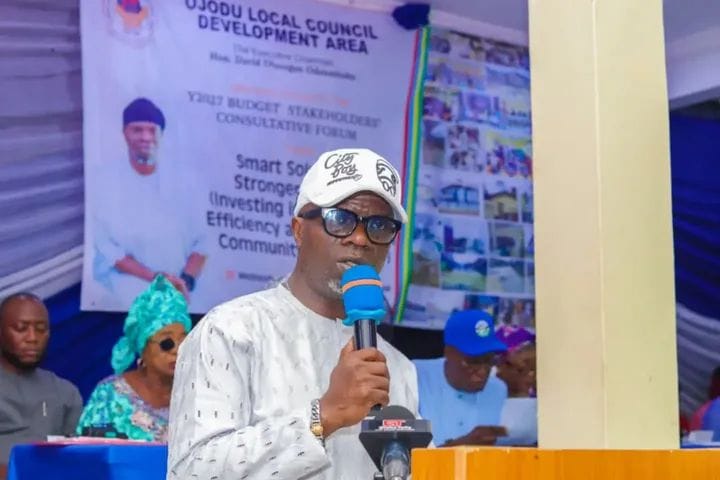
This commitment was prominently demonstrated at the 2027 Budget Stakeholders’ Consultative Forum held on Wednesday, November 11, 2026, at the Council Hall, Ojodu LCDA. The forum provided an opportunity for residents and representatives of various interest groups to articulate their needs, identify development priorities and make recommendations towards the formulation of the council’s 2027 budget.
What distinguishes Odunmbaku’s approach is the deliberate effort to ensure that no segment of society is excluded from the decision-making process. Traditional rulers, religious leaders, market women, youth representatives, community leaders, artisans and persons living with disabilities were all given opportunities to participate in the deliberations.
Organised into their respective wards, stakeholders engaged in discussions, identified pressing community challenges and submitted proposed projects for consideration in the forthcoming budget.
This ward-based consultation model represents a significant departure from conventional top-down planning, where government officials often determine development priorities without sufficient input from the communities expected to benefit from them.
Under the Odunmbaku administration, residents are encouraged to move beyond the traditional role of passive beneficiaries to become active participants in determining the direction of development in their communities.
FROM CITIZEN PARTICIPATION TO COMMUNITY OWNERSHIP
One of the greatest benefits of participatory budgeting is the sense of ownership it creates among residents. When communities are involved in identifying projects from the planning stage, they develop a stronger sense of responsibility towards their successful implementation, protection and sustainability.
They also become better positioned to monitor government interventions, provide constructive feedback and hold relevant authorities accountable for project delivery.
For Ojodu LCDA, this approach provides a practical framework for identifying development priorities across its six wards and ensuring that available resources are directed towards projects that address genuine public needs.
Whether in road construction, drainage, primary healthcare, education, street lighting or economic empowerment, the underlying objective is to ensure that government interventions reflect the actual priorities of the people.
This is particularly important in the face of competing demands and limited financial resources. By incorporating community perspectives into budget preparation, the council can strengthen fiscal discipline, improve project prioritisation and ensure that public funds deliver measurable value.
STRENGTHENING GOVERNMENT-CITIZEN RELATIONSHIPS
Beyond its immediate contribution to budget preparation, the stakeholders’ forum serves as an important platform for continuous engagement between the government and the governed.
It provides the administration with an opportunity to receive commendations, identify shortcomings, assess the impact of existing programmes and understand emerging challenges within the communities.
The positive feedback from representatives of different wards regarding previously completed projects further demonstrates the importance of maintaining an open channel of communication with beneficiaries.
Such engagements enable government to evaluate its performance from the perspective of the people while creating opportunities for necessary adjustments and improvements.
Indeed, participatory governance should not end with the identification of projects. It should extend to implementation, monitoring, evaluation and the assessment of outcomes.
This reinforces a fundamental democratic principle: the most powerful office in a democracy is the Office of the Citizen.
Citizens must have more than the opportunity to elect their leaders. They must also be empowered to contribute to policy decisions, monitor public projects and demand accountability throughout the tenure of elected officials.
THE HEYS RELOADED AGENDA AND THE 2027 DEVELOPMENT PRIORITIES
In his opening remarks at the stakeholders’ meeting, Hon. David Olusegun Odunmbaku reaffirmed that the 2027 budget would consolidate the achievements of his administration while responding to emerging community needs through the HEYS RELOADED Agenda, anchored on Health, Education, Youth Empowerment and Social Infrastructure.
He highlighted the administration’s commitment to strengthening primary healthcare delivery, improving educational outcomes, expanding digital opportunities, accelerating infrastructure development and supporting local economic growth.
He further assured stakeholders that their contributions would be given due consideration in budget preparation, project prioritisation and resource allocation.
This assurance underscores the administration’s recognition that effective governance requires continuous engagement, careful listening and a willingness to translate citizens’ expectations into practical development interventions.
FROM CONSULTATION TO IMPLEMENTATION: THE BUDGET RETREAT
In furtherance of this commitment, the council’s budget retreat commenced on Thursday, November 26, 2026, with a major focus on reviewing and incorporating the submissions and recommendations from the 2027 Budget Stakeholders’ Consultative Forum into the proposed budget framework.
This stage is particularly significant because it connects community consultations with the actual administrative and financial processes required to deliver development projects.
The retreat provides relevant officials and budget planners with an opportunity to examine stakeholders’ submissions, assess their feasibility within available resources, establish priorities and align proposed interventions with the administration’s development agenda.
It is this deliberate transition from public consultation to practical budget formulation that gives participatory governance its real substance.
Rather than treating stakeholders’ engagement as a ceremonial exercise or a statutory formality, the administration is positioning it as an integral component of its planning and decision-making process.
STAKEHOLDERS COMMEND ODUNMBAKU’S INCLUSIVE LEADERSHIP
The administration’s inclusive approach also received commendation from the Chairman of the Community Development Committee, Pastor Segun Fayemi, and the representative of Persons Living With Disabilities, Comrade Abbas.
Both stakeholders applauded the chairman for creating an enabling environment in which different segments of society could express their concerns, contribute to government planning and enjoy a sense of belonging.
They also acknowledged his open-door policy, which they noted had strengthened communication and coordination between the council administration and its various communities.
Their commendations reflect the importance of accessible leadership and the need for public officeholders to maintain meaningful relationships with the people they serve.
A MODEL FOR RESPONSIVE LOCAL GOVERNANCE
The Ojodu LCDA experience offers valuable lessons for other local governments and public administrations seeking to strengthen transparency, accountability and service delivery.
Participatory budgeting should go beyond fulfilling statutory requirements to become an established mechanism for policy formulation, project prioritisation, implementation and evaluation.
Other administrations can draw from this model by institutionalising ward-based consultations, ensuring inclusive stakeholder representation, encouraging community participation in project monitoring and establishing regular feedback channels.
Ultimately, good governance should not be measured exclusively by the number of projects executed, the volume of funds expended or the announcements made by government. It should also be measured by how effectively the government listens, responds to citizens’ concerns and translates their collective aspirations into tangible improvements in their lives.
Hon. David Olusegun Odunmbaku’s approach in Ojodu LCDA demonstrates that inclusive leadership goes beyond giving citizens a voice; it gives them a meaningful stake in the decisions that shape their communities and determine their collective future.
The enduring lesson from Ojodu is clear: sustainable development is achieved when government does not merely govern the people, but actively works with them to determine their needs, establish priorities and build communities where everyone has a sense of ownership and belonging.
That is the essence of participatory governance, and it is the direction in which the Odunmbaku administration is seeking to take Ojodu LCDA.
— Bello Akinkunmi Yakub is Media Aide to the Chairman of Ojodu LCDA.


