



The Lagos State Government has announced that 61.52 per cent of public secondary school students sponsored by the state for the 2025 West African Senior School Certificate Examination (WASSCE) obtained five credits, including English Language and Mathematics.
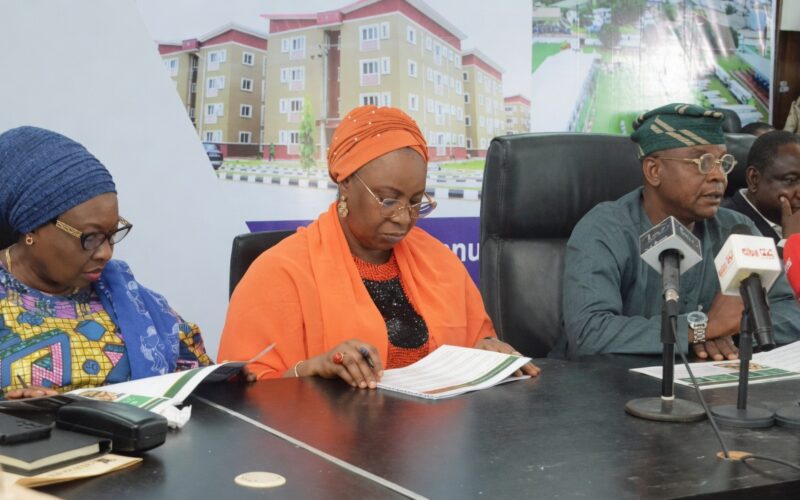
The state’s Commissioner for Basic and Secondary Education, Jamiu Tolani Alli-Balogun, disclosed this on Friday during the 2026 ministerial press briefing held at the Bagauda Kaltho Press Centre, Alausa, Ikeja.
The commissioner also revealed that the state government paid ₦1.4 billion for the registration of 45,598 Senior Secondary School III students for the 2026 WASSCE as part of efforts to eliminate financial barriers to education.
According to Alli-Balogun, the improved performance recorded in the 2025 examination reflected the impact of ongoing educational reforms and learning interventions introduced under the administration of Babajide Sanwo-Olu.
He said the Eko Learners Support Initiative, launched in January 2025, was designed to bridge learning gaps, improve examination preparedness and provide equal opportunities for students across public schools.
“The results are already evident in the 2025 WASSCE, where 61.52 per cent of registered students earned five credits, including English and Mathematics,” he said.
Alli-Balogun noted that the initiative had significantly boosted students’ confidence, participation and academic performance through accessible and curriculum-focused learning support.
As part of efforts to strengthen teaching and learning, the commissioner said the ministry distributed instructional materials, including Essential Mathematics textbooks, Fundamental Formulas of English, Bedrock of English Grammar and Hope-Edu textbooks, to public schools across the state.
He added that smart learning devices were distributed to secondary schools in March 2026 to deepen digital learning and improve access to modern educational tools.
The commissioner further disclosed that the state established a Teachers Digital Hub in January 2026 to facilitate live-streamed teaching sessions across schools in Lagos, ensuring wider access to quality instruction.
According to him, educational film shows were also organised across the six education districts, while digital animations were showcased during the Festival of Instructional Materials to make learning more engaging for students.
On school admissions, Alli-Balogun said 4,539 candidates applied for admission into Model Colleges and upgraded secondary schools, out of which 3,024 secured provisional admission, representing a 66.62 per cent success rate.
He added that 11,727 students were transferred into public Junior Secondary School II and Senior Secondary School I classes across the state.
Speaking on infrastructure development, the commissioner revealed that 15 schools were constructed or rehabilitated in hard-to-reach communities, while modular classrooms were introduced in several schools to address overcrowding.
He highlighted the completion of the Tolu School Complex in Ajegunle, describing it as a major educational project comprising 36 schools with capacity for more than 20,000 students.
Alli-Balogun also disclosed that the government supplied 223,343 units of ergonomic furniture to public schools, completed eight new 18-classroom blocks in 2025 and commenced construction of another 18 classroom blocks in 2026.
According to him, seven additional classroom blocks have already been approved for the 2026/2027 academic session, bringing the total number of classrooms delivered since the reconstitution of the Special Committee on Rehabilitation of Public Schools to 1,416.
The commissioner further stated that the ministry approved 37 non-governmental organisations to support interventions in healthcare, innovation, entrepreneurship, leadership and career development programmes in public schools.
He added that 18,122 girls across the six education districts had been vaccinated against the Human Papillomavirus (HPV) under the state’s school health intervention programme.