





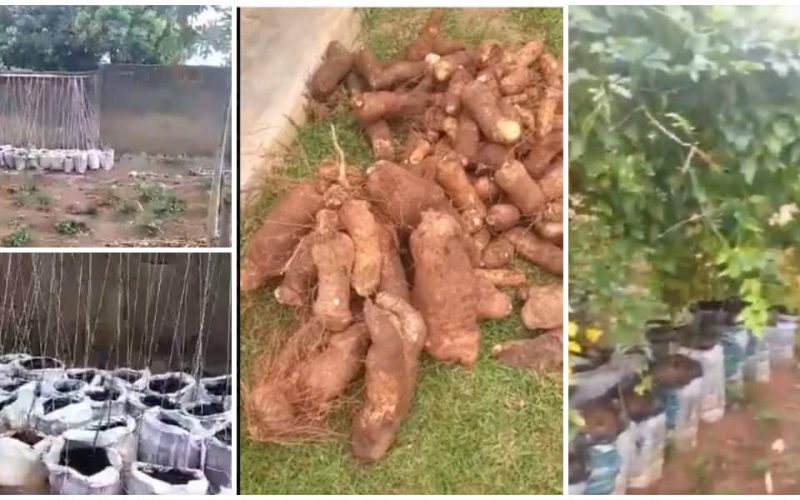
This is an enlightenment post in support of the wonderful initiative by the Nigeria’s First Lady Senator SEN. OLUREMI TINUBU, CON ‘Every Home A Garden’, inaugurated to help increase food supply in Nigeria, I have decided to give some simple tips on how to cultivate some staple crops from home or small space without necessarily looking for a farmland.
Worldwide yam production in 2007 amounted to 52 million tons, of which Africa produced 96%. Most of the world’s production comes from West Africa representing 94%, with Nigeria alone producing 71%, equalling more than 37 million tons. African countries imported more than 2,000 tons in 2002, and exported 15,500, of which Nigeria exported 12%.
Yam production is declining in some traditional producing areas due to declining soil fertility, increasing pest pressures and the high cost of labor. Smallholders therefore need access to innovations to reduce labor and improve productivity.
Yams are grown by planting pieces of tuber, or small whole tubers (‘seed yams’) saved from the previous season. Small-scale farmers, the majority of producers, often intercrop yams with cereals and vegetables.
How you grow yam from the comfort of your compound using sack.
Follow these 6 simple steps:
Step 1 – Get cement sacks or rice sacks, the bigger the sacks the better.
Step 2- Get ash from burnt charcoal, What you see on that bowl is not cement, It is burnt charcoal ash.
Step 3- Fill the sacks with Loam Soil.
Step 4- You either bury the yam heads or Cut your yam into small sizes, rub the ash on the piece, then bury deep in the sack filled with soil.
Step 5- Place the sacks outside where it can access rain and sunlight.
Step 6- Soon as it starts springing leaves attach a stick or rope to it, so the leaves can climb.
HARVEST
In West and Central Africa tubers are planted between February and April, depending on whether in humid forest or on the savanna, and are harvested 180 to 270 days later. Care is needed during harvesting to minimize damage to tubers that lead to rot and a decrease in market value. Harvested tubers normally stay dormant (do not develop sprouts) for 30 to 120 days depending on environmental conditions, the date of harvest, and the species. This means that only one crop cycle is possible per year, possibly restricting supply.
Tayo Aderinola EXECUTIVE EDITOR www.lagospanorama.com