




Today’s developments centre on President Tinubu’s new infrastructure commitment during his South-South campaign, fresh World Bank figures on Nigeria’s external debt, and the release of long-stranded electricity equipment In Africa, Sudan’s humanitarian agencies warn of a serious funding shortfall. Globally, AI-related stocks have recovered some of Thursday’s losses, although investors remain concerned about technology spending and regulation.
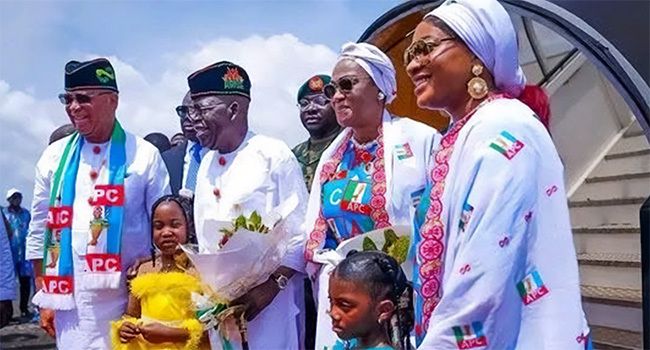
1. Nigeria 2027: Tinubu approves Ibom Deep Seaport project during South-South campaign
What happened: President Bola Tinubu announced approval of the proposed Ibom Deep Seaport at an APC rally in Uyo on Friday, 6 November, in response to a request from Akwa Ibom Governor Umo Eno.
Eno described the project as critical to the state’s maritime economy and pledged to mobilise two million votes for Tinubu’s re-election. That is a political commitment, not an electoral forecast. The president is scheduled to attend another APC rally in Port Harcourt today.
Why it matters: The long-delayed seaport could expand Nigeria’s cargo-handling capacity and support manufacturing, logistics and international trade if successfully financed and constructed.
Strategic implications: The announcement links an important economic infrastructure proposal with the ongoing election campaign. Presidential approval does not yet establish an agreed financing structure or construction timetable.
What to watch: Formal project approval documents, funding arrangements, implementation milestones and today’s Rivers State campaign activities.
2. Nigeria economy: World Bank puts total external debt at $145 billion
What happened: The World Bank’s International Debt Report 2026, released on 5 November and reported extensively on Friday, shows that Nigeria’s total external debt rose by 6.6% to $145.02 billion at the end of 2025.
2024 external debt
$135.99bn
2025 external debt
$145.02bn
Public/guaranteed 43% Private 38%
Short-term 19%
Advertisement
The total includes approximately $62.4 billion in public and publicly guaranteed obligations, $54.5 billion in private nonguaranteed debt and $28.1 billion in short-term obligations. It must not be confused with government external debt alone.
Why it matters: External debt servicing is consuming more export earnings, even as some indicators of debt sustainability have improved.
Business and political implications: The figures warrant careful scrutiny alongside Tinubu’s revised $7.7 billion external borrowing proposal. Borrowing costs, project productivity and fiscal transparency will remain central to the government’s economic policy debate.
What to watch: Legislative scrutiny of new borrowing, financing terms, debt-service projections and independently measured returns on infrastructure spending.
3. Nigeria power: Customs begins release of 98 containers of electricity equipment stranded for years
What happened: The Nigeria Customs Service announced on Friday, 6 November, that it had begun evacuating 98 containers of electrical equipment from Lagos ports following the approval of waivers on accumulated charges.
Some consignments had reportedly remained stranded for between 14 and 20 years. The equipment includes transformers, cables and switchgear intended for government electricity projects. The first 44 containers are being released from the ENL terminal, with another 54 to follow at other terminals.
Why it matters: The episode exposes the economic consequences of prolonged administrative delays, with critical public infrastructure left unused despite enormous electricity shortages.
Business opportunities and risks: Deployment could strengthen electricity transmission and reduce operating costs for industry, broadcasting and data centres. However, the equipment’s condition after years in storage must first be assessed, and release from the ports is not equivalent to installation.
What to watch: Technical inspections, the cost of rehabilitation, deployment locations and whether the recovered assets add measurable capacity to Nigeria’s electricity network.
4. Africa: Millions of displaced Sudanese face shelter crisis as humanitarian funds run out
What happened: UNHCR and the International Organization for Migration warned on Friday, 6 November, that emergency shelter supplies are running dangerously low amid Sudan’s continuing civil war.
The agencies say current funding allows them to prioritise only about 10% of those requiring assistance. IOM officials report that emergency warehouses have been emptied following extensive distributions.
Why it matters: Sudan’s war has produced one of the world’s largest displacement emergencies, with millions unable to return safely to functioning homes and services.
African and geopolitical implications: Funding shortages threaten humanitarian access and place further pressure on neighbouring countries accommodating refugees. The situation raises renewed questions about international burden-sharing and the effectiveness of regional peace initiatives.
What to watch: Emergency donor commitments, aid deliveries, security conditions for returning families and diplomatic efforts to reduce the fighting.
5. Global markets and AI: Technology shares rebound, but Wall Street records another difficult week
What happened: US technology shares recovered modestly on Friday, 6 November, following Thursday’s severe sell-off, driven by anxiety over AI infrastructure costs and potential regulatory restrictions after the US midterm elections.
Chipmakers led the recovery: AMD gained approximately 11%, while Nvidia rose nearly 3%. However, the S&P 500 still recorded its worst weekly decline in more than a year.
Why it matters: Investors are increasingly questioning whether exceptionally large AI capital expenditures can deliver sustainable cash flows and returns. Stronger-than-expected US employment figures have also increased expectations of tighter monetary policy.
What to watch: US inflation figures next week, Federal Reserve expectations, changes in data centre regulation and whether the market recovery survives the next trading session.


