



The Federal Government has poured significant resources into promoting Compressed Natural Gas as a cheaper transport fuel, promising better living conditions for Nigerians. Yet, transport costs remain high nationwide. In this report, OLASUNKANMI AKINLOTAN examines the key factors driving the persistent rise in fares, as highlighted by industry stakeholders
In Nigeria, a convergence of economic challenges, including the removal of fuel subsidies, soaring inflation, and the devaluation of the naira, among other man-made causes, has led to a sharp and sustained rise in transportation costs nationwide. This surge is placing a heavy burden on commuters and households and, in turn, deepening economic hardship and prompting a significant deterioration in living standards.
Particularly, the impact of transportation on food prices has, in no small measure, affected the standard of living for Nigerians.
Successive government administrations at the centre have taken turns attempting to stem the tide of skyrocketing living costs in different ways, but Nigerians have continued to wallow in abject poverty. The World Bank said the poverty rate among Nigeria’s rural population has reached an alarming 75.5 per cent, highlighting deepening inequality and widespread economic hardship across the country.
According to the World Bank’s latest April 2025 Poverty and Equity Brief for Nigeria, rural dwellers are overwhelmingly bearing the brunt of economic stagnation, inflation, and structural challenges that have characterised the country’s growth trajectory in recent years.
The data, derived from Nigeria’s most recent nationally representative surveys, show that while 41.3 per cent of the urban population lives below the poverty line, the figure for rural Nigeria is almost double.
Different leaders have adopted different approaches while in power. When President Bola Tinubu ascended to power, he identified the continuous payment of fuel subsidies as anti-economy and immediately suspended it, leaving marketers to sell at competitive prices.
Before now, the Nigerian government had, for decades, subsidised fuel and fixed retail prices of petroleum products. The payments have, however, threatened the nation’s fiscal position and impacted the government’s ability to fund developmental projects across the nation.
In November 2021, the federal government announced plans to remove the fuel subsidy and replace it with a monthly N5,000 transport grant for poor Nigerians.
However, the government later suspended the plan after the Nigeria Labour Congress and the Trade Union Congress threatened to embark on mass protests.
In 2023, Tinubu finally suspended the fuel subsidy in his inaugural speech and later proposed the use of Compressed Natural Gas as an alternative for Nigerians.
In August 2024, while inaugurating 30 hybrid-powered Compressed Natural Gas buses donated by the Depots and Petroleum Products Marketers Association of Nigeria at the State House in Abuja, Tinubu emphasised the urgent need for Nigeria to utilise its vast natural gas resources in the transportation sector.
The President stated that CNG transportation is an economic necessity for Nigeria, signalling a significant shift in the country’s approach to public transportation and energy use.
“Utilising natural gas to power Nigeria’s transportation industry is the next way to go,” he stated
Tinubu also highlighted CNG as a solution to the recent challenges of high transportation costs faced by many Nigerians.
However, in December 2024, the Minister of Petroleum Resources (Gas), Ekperikpe Ekpo, said the Federal Government had so far invested $450m in Compressed Natural Gas.
Early in 2025, the government announced plans to attract $1bn in annual investments in Nigeria’s Compressed Natural Gas conversion projects.
The Programme Director of the Presidential Compressed Natural Gas Initiative, Michael Oluwagbemi, made this known during the launch of a CNG Conversion Centre at commercial parks in Mile 2, Lagos, in collaboration with the National Union of Road Transport Workers.
He disclosed that in the last one year, over $500m had already been invested in the CNG space.
After a series of appeals and investments in CNG infrastructure across Nigeria, citizens started keying into the government’s initiative as both private and mainly commercial vehicles began converting to CNG.
Drivers reveal reason for sustained hiked prices despite CNG
While private vehicles mostly build their tanks in the car boot, commercial vehicles’ tanks are mostly conspicuously seen under passengers’ seats. While some are yet to convert, many commercial transporters have started using CNG.
Meanwhile, passengers told our correspondent that the solution was yet to translate into reduced transport fares because transport unions, associations backed by state governments, take what could have been gains for transporters.
Findings have shown that transport unions are not alone, as policemen as well as officers of the Federal Road Safety Corps have also been contributing to travellers’ pains.
Drivers who bemoaned the situation stressed that transport union leaders and their postmen and enforcers are living in affluence far beyond what drivers could afford.
Our correspondent observed policemen collecting money from motorists, especially on major expressways.
In Ogun State, there are seven transport unions collecting levies from motorcyclists and tricyclists. These unions include the National Union of Road Transport Workers, the Road Transport Employers Association of Nigeria, and the Ogun State Parks and Garages Management Board.
Others are the Amalgamated Commercial Motorcycle Owners and Riders Association of Nigeria and the Articulated Motorcycle Owners and Riders Association of Nigeria.
In Lagos, there are mainly two major unions collecting the controversial levies from transporters.
In Oyo State, there are three major unions: the Park Management System, the Motorcycle Transport Union of Nigeria, and the Amalgamated Commercial Tricycle and Motorcycle Owners, Repairs and Riders Association of Nigeria, among others.
However, despite the presence of CNG, according to the National Bureau of Statistics Transport Fare Watch for April 2024, the average fare paid by commuters for intercity bus journeys in Nigeria surged to N7,122.57 in April 2024 from N3,994.51 in April 2023.
The report also noted a minor decrease of 0.43 per cent month-on-month, with the average fare dropping from N7,152.97 in March 2024.
“The average fare paid by commuters for bus journey intercity per drop was N7,122.57 in April 2024, indicating a decline of 0.43 per cent on a month-on-month basis compared to N7,152.97 in March 2024.
“On a year-on-year basis, the fare rose by 78.31 per cent from N3,994.51 in April 2023,” the report read in part.
Moreover, the report disclosed that Anambra State recorded the highest average fare for intercity bus travel, standing at N9,600 per trip.
Abia and Gombe states trailed closely, jointly occupying the second position with an average fare of N8,300 per trip, while Akwa Ibom State secured the third spot with N8,250 per trip.
Conversely, Kwara State recorded the lowest average fare for intercity bus trips in April 2024, with travellers paying N5,500 per trip.
Ebonyi State followed with an average fare of N5,600 per trip, while Taraba State ranked third among states with the lowest fares at N6,100 per trip.
Background
Giving a background to how the union came into being, 72-year-old Apostle Erastus Aladesuru, the founder of People of Praise International Ministry, located in Ikotun Egbe, and a former National Union of Road Transport Workers chairman in Kwara State in the 80s, explained that road union was set up to defend the collective interests of the motor transporters during the colonial era.
According to Aladesuru, in the 1930s, the transport union fought and successfully resisted attempts by the colonial government to impose higher duties on vehicles in areas where road transport was competing with the railway.
He explained that NURTW, which is the largest transport union in the country, was founded in 1978.
Aladesuru said that to manage the affairs of the union, the road transport workers set up an administrative structure, with secretariats established in units, branches, zones and states.
Each of these has secretaries and elected officers, who are headed by chairmen, to coordinate the activities of the transport union throughout the federation, FCT included.
“Even though the union consists of people of integrity, probity and sound intellectual reasoning, there is this misconception held by the public against its members, who perceive them as school dropouts, irresponsible, lazy and a bunch of miscreants. Unfortunately, this label was brought upon them by the unguided attitude of quite a number of them,” he stated.
But the mandate for the union seems to have changed as drivers say they don’t benefit from the union but only pay to them on a daily basis.
Levis on drivers spark high fares
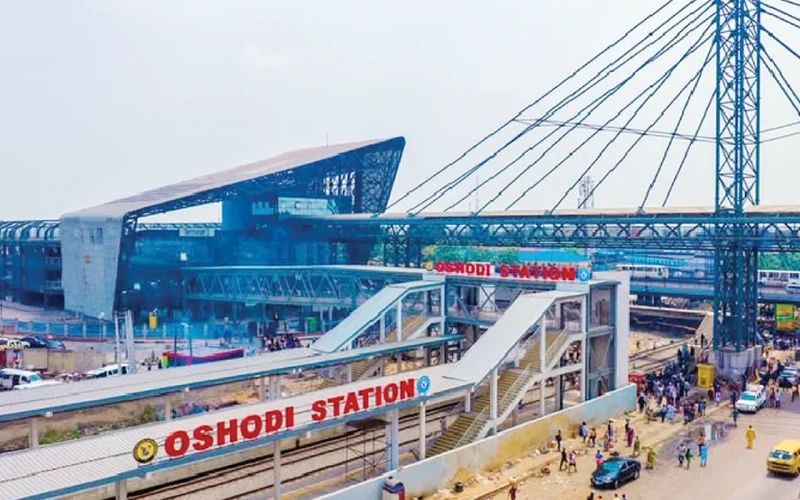
Chibuzor Ugo in Oshodi, Lagos, who was visibly angry with the state of things, explained that mid-last year, drivers were paying N800 for each passenger going to the east to the transport unions, but the levy had jumped to N2,000 per passenger.


