




The Nigerian National Petroleum Company Limited (NNPC Ltd.) has insisted that the Old Port Harcourt Refinery is up and running, with loading operations in full swing.
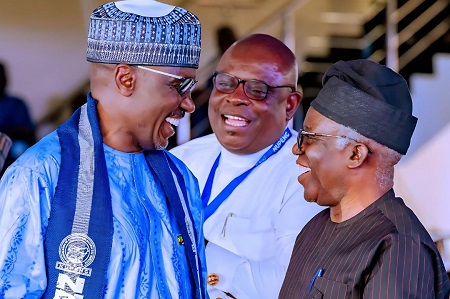
The Group Chief Executive Officer, Mr. Mele Kyari, confirmed the commissioning of the NUPENG Towers in Lagos on Wednesday.
In a goodwill message at the event, Kyari extended an invitation to human rights activist and lawyer, Mr. Femi Falana, and all those in doubt, to join the NNPC Ltd on a tour of the refineries in Port Harcourt, Warri, and Kaduna to verify their status.
He also shed light on the controversy around product blending, stating that blending was not a crime as it is an integral part of the refining process. “If you don’t blend, you will bring out off-spec products which will destroy your vehicles. Every refinery blend because what is on the specification in the United States of America will be off-spec in Nigeria and elsewhere. Blending is necessary to bring products to the specification of different countries or regions,” he explained.
Kyari also congratulated NUPENG on completing the NUPENG Towers and urged the union to prioritize dialogue and cooperation in its relationship with NNPC Ltd. and the Federal Government.
He disclosed that the President’s interventions in the oil and gas industry by way of Executive Orders were yielding positive results, with more investments coming in and prospects of more jobs in the industry.