

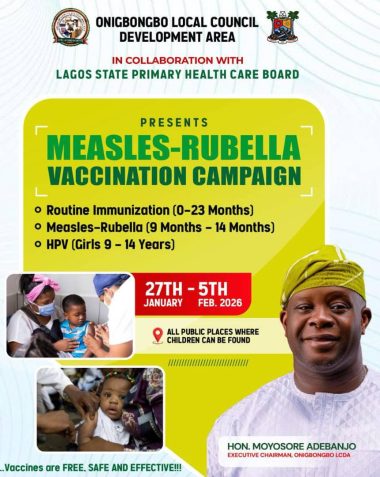
The Onigbongbo Local Council Development Area (LCDA) has announced the commencement of the Measles–Rubella (MR) Vaccination Programme, organized by the Lagos State Government in collaboration with the council.
The vaccination exercise commenced on Monday, January 27, 2026, and will run until Wednesday, February 5, 2026.
According to the council, the programme targets children aged nine months to 14 years and will be carried out across schools, churches, mosques, markets, all Primary Health Care Centres (PHCs), as well as other designated outreach points and public places where children can be reached.
The exercise will be conducted by trained healthcare personnel to ensure safety, efficiency and effectiveness throughout the vaccination period.
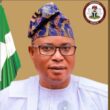
The Executive Chairman of Onigbongbo LCDA, Hon. Moyosore Adebanjo, described the programme as a vital public health initiative aimed at protecting children against measles and rubella, preventing disease outbreaks and promoting the overall health and well-being of residents.
He urged parents, guardians, teachers, religious leaders, market associations and community stakeholders to cooperate with health officials by presenting eligible children for vaccination and supporting the exercise.
The council emphasized that the vaccination is safe, effective and free of charge, adding that the full participation of residents is crucial to achieving comprehensive immunization coverage across Onigbongbo LCDA.