


Northern political and traditional leaders on Monday reiterated strong support for the swift establishment of state police, declaring that decentralising Nigeria’s policing structure has become critical to addressing the region’s worsening insecurity.
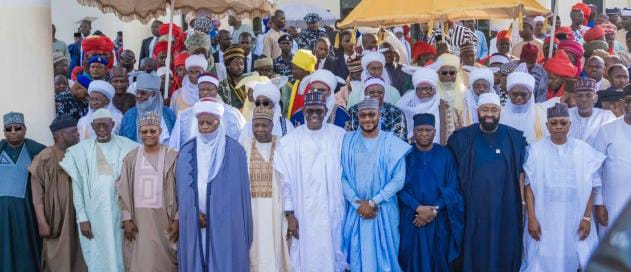
Their position formed part of a communiqué issued after a high-level meeting in Kaduna, where governors and first-class traditional rulers reviewed the persistent security challenges confronting the North. The leaders warned that Nigeria’s centralised policing system can no longer effectively serve a nation of over 200 million people, particularly with vast ungoverned spaces increasingly exploited by criminal groups.
They noted that personnel shortages and structural constraints continue to leave many rural communities without adequate protection.
Hosted by Kaduna State Governor Uba Sani and chaired by Gombe State Governor Inuwa Yahaya, the meeting examined the rising threats of banditry, mass abductions, farmer–herder clashes and disruptions to economic activities across the region.
In his remarks, Governor Sani said the North faces a dynamic and fast-evolving security landscape that requires coordinated action and community-responsive policing. He rejected suggestions that northern governors have been indifferent, insisting that leaders of the region have been working collectively to tackle threats.
“The public conversation about insecurity in the North has become more complicated,” he said. “A few politically motivated voices have created the impression that northern governors have grown complacent. Nothing could be further from the truth. We understand the weight of our mandate and the urgency attached to every security concern.”
Sani stressed that the establishment of state police has become “unavoidable”, citing the limited number of police personnel nationwide and the growing sophistication of violent groups. With fewer than 400,000 officers serving the entire country, he said, many remote communities remain exposed.
The governor also disclosed that northern governors now operate an informal peer review system, sharing intelligence and adopting strategies that have proven effective in other states.
Governor Inuwa Yahaya echoed these concerns, stressing that insecurity affects all northern residents—Christians and Muslims alike—and should not be framed through religious or ethnic lenses. He praised President Bola Tinubu for ongoing security reforms but maintained that state police remains essential to sustaining any progress achieved.
He cautioned leaders and commentators against divisive rhetoric that risks fracturing national cohesion, warning that such narratives embolden criminal networks seeking to exploit communal tensions.
Yahaya also underscored the deeper structural drivers of insecurity, including poverty, illiteracy, climate pressures and decades of underdevelopment. Addressing these root factors, he said, must complement efforts to strengthen policing frameworks.
While welcoming international support, he insisted that any external partnership must respect Nigeria’s sovereignty and the unique social dynamics of northern communities.
At the close of the meeting, governors and traditional rulers pledged to intensify collaboration, expand community-level engagement and back reforms aimed at enhancing security across the region. They urged the Federal Government to expedite the process of establishing state police, stressing that the North urgently requires a more adaptive and locally grounded security model.