




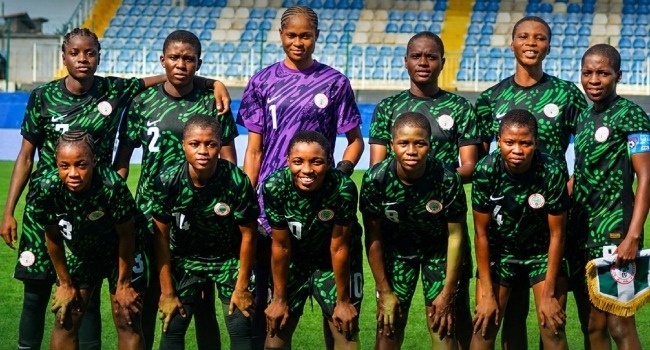
The Flamingos of Nigeria have clinched a ticket to the 2026 U-17 Women’s World Cup following a defeat of neighbours Benin Republic in the final round of qualifiers.
Nigeria qualified for the tournament after winning the second leg of the tie 5-3 on Saturday at the Stade de Kégué in Lomé, Togo, advancing on an 8-5 aggregate.
The Flamingos had previously secured a 3-2 victory over the Young Amazons in Ikenne, Ogun State, during the first leg of the fixture.
Mark Akpan, Esther Stephen, and Queen Joseph were all on the scoresheet as Nigeria romped to victory in the second leg to secure their World Cup spot.
The Flamingos thus claimed one of the four slots for Africa for the tournament they will now join hosts Morocco (making it five for the continent) in the 24-team competition which is scheduled to take place from 17 October to 7 November 2026.
Nigeria’s ticket to Morocco was secured in seamless fashion, with Coach Akeem Busari’s side smashing Guinea 11-0 on aggregate (5-0 away and 6-0 home) in the second round of qualifiers.
The qualification further cements Nigeria’s status as one of the most consistent teams in the tournament apart from the 2018 edition, the Flamingos have qualified for every single U-17 Women’s World Cup.
Their best outing came in 2022 when Nigeria finished third.
The Flamingos have reached the quarter-finals four times, crashed out twice in the group stage, and finished in the round of 16 once with their place at Morocco 2026 now secured, Nigeria will be hoping to go a step further and win the competition on African soil.