






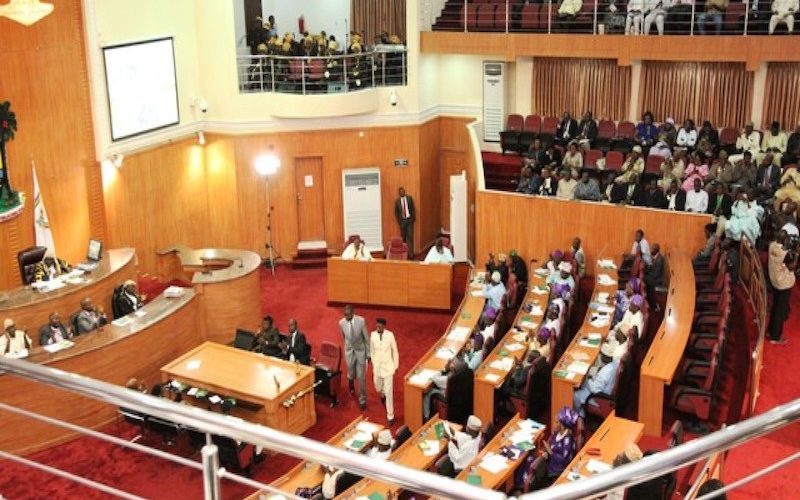
Lagos Assembly has passed an amended version of the Criminal Justice Law of the State barring the police from parading suspects before the media henceforth.
The bill was passed at a sitting presided over by Deputy Speaker, Wasiu Eshilokun-Sanni, on behalf of Speaker, Mudashiru Obasa.
Section 9(A) of the newly passed bill states: “As from the commencement of this law, the police shall refrain from parading any suspect before the media.”
The bill also stipulates conditions under which a policeman can arrest without a warrant, one of which is that a person must be reasonably suspected to unlawfully be in possession of firearms or other such dangerous instruments.
A subsection of the bill also barred the police or any other agency from arresting a person “in lieu of any other person in a criminal matter”.
The bill adds a person who is arrested “shall be given reasonable facilities for obtaining legal advice, bail or making arrangements for defense or release.
“A suspect should also be ‘accorded humane treatment, with the right to dignity of the person; not subjected to any form of torture, cruel, inhumane or degrading treatment; be brought before the court as prescribed by this law or any other written law; or be released conditionally or unconditionally.”
After a voice vote, the Deputy Speaker directed the acting Clerk of the House, Olalekan Onafeko, to transmit the bill to Governor Babajide Sanwo-Olu for assent.


