





Don’t Spend Empowerment Grants on Aso Ebi, Faleke Tells Beneficiaries
LAGOS — The Chairman of the House of Representatives Committee on Finance, Rt. Hon. James Abiodun Faleke, has cautioned beneficiaries of government empowerment schemes against diverting grants meant to establish sustainable livelihoods to non-productive spending, including the purchase of aso ebi.
Faleke, who said 29,177 Ikeja Federal Constituency residents had so far undergone empowerment training and received cash grants, stressed that the ultimate objective of such interventions should be economic independence and wealth creation.
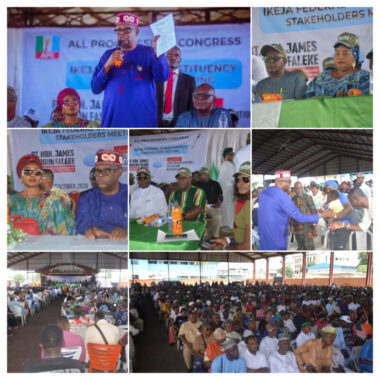
He spoke on Thursday at a stakeholders’ meeting he hosted to mark Nigeria’s Independence Day at the Blue Roof, Lagos Television Complex, Agidingbi, Ikeja.
The lawmaker representing Ikeja Federal Constituency expressed concern over what he described as the inappropriate use of empowerment funds by some beneficiaries.
“We have done empowerment training with 29,177 residents and provided cash grants. But the funniest thing is that when we do such training and cash empowerment, the next thing you see is that they’ll go and buy *aso ebi* with it. This is not how it should be” Faleke said.
He argued that beneficiaries should deploy financial support into ventures capable of generating income and creating opportunities for further growth.
To illustrate his point, Faleke recounted the experience of a visually impaired beneficiary who reportedly received ₦75,000 under a Federal Government humanitarian intervention.
Rather than spend the money on immediate consumption, the beneficiary invested it in vegetable seeds and subsequently expanded the venture, supplying produce to several restaurants.
According to Faleke, the beneficiary had reportedly generated more than four times the value of the initial grant, demonstrating how targeted financial intervention could translate into sustainable economic activity.
“That’s how it should be,” Faleke stated.
The lawmaker maintained that empowerment programmes should be measured not merely by the number of people who receive grants, but by the extent to which beneficiaries are able to turn such interventions into sustainable businesses and sources of livelihood.
He therefore urged beneficiaries to see government grants as seed capital for economic transformation rather than windfalls for immediate consumption.
“Empowerment should not end with receiving money; it should create a livelihood,” he added.
Courtesy: Lagos Panorama
#LagosPanorama #JamesAbiodunFaleke #IkejaFederalConstituency #Empowerment #EconomicEmpowerment #Lagos


