



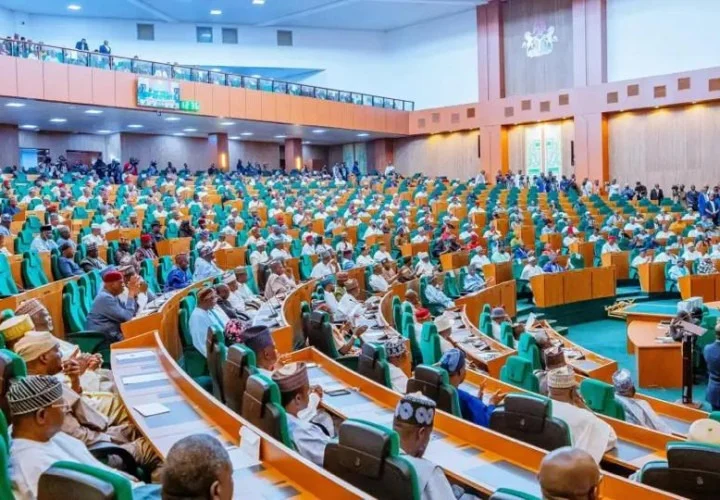
The House of Representatives has urged the Federal Government to immediately undertake a comprehensive review of bilateral engagement with the Republic of South Africa over the xenophobic attacks against Nigerians and other Africans resident in the country.
According to House, the government should suspend relations, recalibrate some specific areas of bilateral cooperation, where necessary as well as strengthen consular services, legal assistance, emergency evacuation arrangements and reintegration support for Nigerian victims.
The parliament, while seeking more diplomatic engagement with South Africa over the issue also implored the government to formally engage the African Union, the South African Development Community (SADC) , the United Nations (UN) and the African Commission on Human and People’s Rights on Protection of African Nationals in South Africa.
Furthermore, the House urged government to immediately summon the South African High Commission to Nigeria to provide a comprehensive explanation regarding the recent killings, and to communicate to Nigeria, in clear terms, the official position of the South African government on the protection of Nigerian citizens and other African nationals.
It also urged the Federal Government to demand an independent, transparent, impartial, and internationally monitored investigation into the death of affected Nigerians and all other African victims, so as to ensure that the perpetrators are identified and prosecuted.
This followed the adoption of a motion by Yusuf Gagdi and Billy Osawaru on xenophobic attacks against Nigerians and other Africans resident in South Africa.
Leading debate on the motion, Gagdi informed the House that South Africa has over the years witnessed repeated waves of xenophobic violence targeted at Nigerians and other African nationals.
The lawmaker noted that the development has resulted in the loss of innocent lives, destruction of businesses, unlawful arrest of Nigerians, forced displacement, and widespread fear.
“Recent reports, Mr. Speaker, indicate a fresh escalation of attacks targeting Nigerians, Ghanaians, Zimbabweans, Zambians, Mozambicans, Malawians, and other African nationals lawfully residing in South Africa.
“The federal government of Nigeria has confirmed the recent killing of two Nigerian citizens, including one who reportedly died while in South African police custody and another one who was brutally murdered in front of his business premises.
“These tragic incidents, Mr. Speaker, have once again exposed Nigerians and other African nationals to grave danger despite repeated diplomatic engagement between Nigeria and South Africa.”
Gagdi expressed concern that the “xenophobic violence has become recurring, systematic, and increasingly deadly. The repeated attacks have continued despite previous assurances by the government of South Africa that adequate measures will be taken to guarantee the safety of foreign nationals.
“Innocent Africans continue to lose their lives, while criminal perpetrators often escape justice, thereby encouraging impunity.
“Any inflammatory, Mr. Speaker, or hateful public statement capable of inciting hostility against Nigerians or other African nationals as presented by the South African General Minister is irresponsible, unacceptable, and capable of aggravating an already existing volatile security situation.
“The continued attack, Mr. Speaker, undermined the ideals of African unity. It equally undermined, Mr. Speaker, the ideals of pan-Africanism, regional integration, and peaceful coexistence upon which the African Union was founded.”
Gagdi called for a decisive action, stating that “continued inaction may embolden perpetrators and weaken confidence of regional institutions established to protect African citizens. Those recurring attacks threaten diplomatic relations, economic cooperation, and continental integration.
“The continuous killing of Nigerians abroad, particularly in South Africa, without adequate accountability, diminishes confidence in the collective commitments of African states to uphold human rights, justice, and the rule of law.”
Osawaru, in his contribution, blamed South African security agencies for the recurring attacks on Nigerians, saying they had “the blood of Nigerians on their hands.”
He said despite Nigeria’s diplomatic engagements, South Africa continued to undermine Nigeria’s sovereignty and fail to protect its citizens.
Osawaru urged the Federal Government to adopt a tougher stance, saying Nigeria “must not remain a toothless bulldog.”
He also proposed an amendment to the motion calling for Nigeria to cut diplomatic ties with South Africa.
Kayode Moshood (Lagos, APC) said Nigeria contributed millions of dollars to the anti-apartheid movement, noting that the resources could have been invested in the country’s own development.
Advertisement
Okey-Joe Onuakalusi (Lagos, NDC) said Nigeria must respond firmly to countries that treat its citizens with hostility, adding that the names of Nigerians killed in South Africa should be compiled and presented before the International Criminal Court (ICC).
At the close of the debate, Benjamin Kalu, the deputy speaker, subjected Osawaru’s proposal for Nigeria to sever diplomatic ties with South Africa to a voice vote, but the House rejected it.
Kalu said Nigeria has the capacity to respond in kind to South Africa but would instead pursue diplomatic channels.