





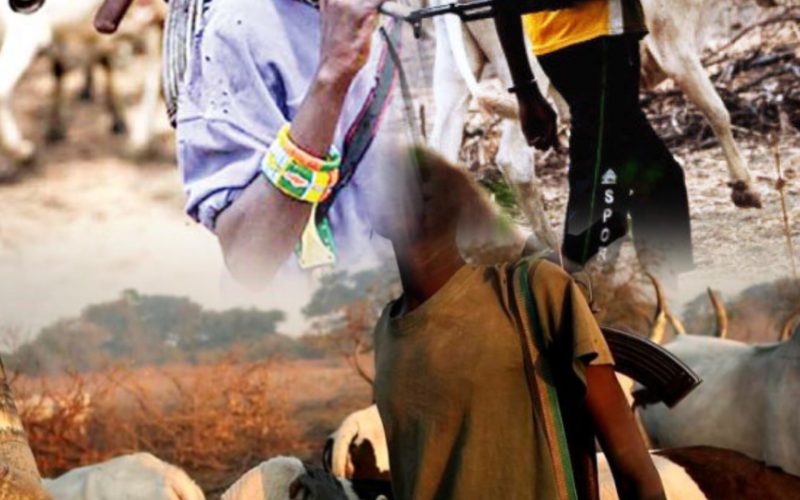
Nigeria, Africa’s most populous nation, has battled with insecurity for decades. From insurgencies in the northeast to militancy in the Niger Delta, the country has repeatedly found itself in cycles of violence, unrest, and instability. In recent years, one of the most troubling dimensions of this insecurity has been the conflict linked to Fulani herdsmen and farmer communities across the country.
This conflict has evolved from isolated clashes into a national security crisis, claiming thousands of lives, displacing communities, and threatening the unity of Nigeria.
Understanding the roots, dynamics, and consequences of this insecurity is crucial to appreciating the scale of the challenge Nigeria faces.
Historical and Socioeconomic Background
The Fulani are traditionally pastoralists, moving with their cattle in search of grazing lands and water. For centuries, they practiced seasonal migration across the Sahel and West African regions. In Nigeria, Fulani herders have long coexisted with sedentary farming communities, often engaging in trade: farmers provided grains while herders provided milk and meat. While disputes occasionally arose over damaged crops or access to water, these conflicts were typically resolved through traditional mediation.
However, over the past four decades, this fragile balance has deteriorated. Several factors have contributed:
1. Population Growth – Nigeria’s population has exploded, rising from about 55 million in 1963 to over 200 million today. This has placed immense pressure on land resources. Farmers have expanded their fields into areas previously used as grazing routes.
2. Climate Change and Desertification – Northern Nigeria has experienced increasing desertification and shrinking pasture lands. As the Sahara advances southward, herders are forced to move further into the central and southern states, where fertile land is already scarce.
3. Weak Institutions – The decline of traditional conflict resolution systems and the weakness of modern governance structures have created a vacuum. Disputes that could once be settled through dialogue now escalate into violence.
4. Proliferation of Small Arms – Widespread access to firearms has made clashes deadlier. What could have been minor disputes now result in mass killings.
The Fulani Herdsmen Crisis
The crisis between Fulani herdsmen and farmers has become one of Nigeria’s deadliest security challenges. Reports from groups like the International Crisis Group and Amnesty International suggest that herder-farmer clashes now claim more lives annually than even Boko Haram insurgency in some years.
The violence typically begins with disputes over land. Herders may allow their cattle to graze on farmlands, destroying crops. Farmers retaliate by attacking herders or killing livestock. This sparks reprisal attacks, often escalating into cycles of revenge. Communities are razed, people are killed, and entire villages are displaced.
The crisis is most pronounced in Nigeria’s “Middle Belt” states such as Benue, Plateau, Nasarawa, and Taraba. These regions are both agriculturally rich and ethnically diverse, making them flashpoints for competition over land. However, the conflict has spread further south into states like Enugu, Ekiti, Ondo, and Oyo, regions that historically had little Fulani presence.
Human and Economic Costs
The human cost of the herder-farmer conflict is staggering. Thousands of people have been killed in attacks and reprisals. Villages have been burned, women assaulted, and children orphaned. Beyond loss of life, the crisis has created a massive displacement problem. Internally Displaced Persons (IDPs) camps are scattered across the Middle Belt, adding to the already heavy burden from the Boko Haram conflict in the northeast.
Economically, the impact is devastating. Nigeria relies heavily on agriculture, which contributes significantly to its GDP and employs a large proportion of the population. Persistent clashes disrupt farming cycles, destroy crops, and discourage investment in rural areas. Livestock farming also suffers, as herders lose cattle to theft, killings, or starvation. The overall result is food insecurity, higher prices, and worsening poverty.
Political and Ethnic Dimensions
While the conflict has roots in resource competition, it has also taken on ethnic and religious undertones. Fulani herders are mostly Muslim, while many farming communities in the Middle Belt and South are Christian or adherents of indigenous religions. This has fueled perceptions that the crisis is not just about land, but about ethnic domination and religious persecution. Politicians and interest groups have often exploited these narratives for political gain, deepening mistrust between communities.
Furthermore, the fact that Nigeria’s current president (2015–2023), Muhammadu Buhari, is himself a Fulani has led to allegations of bias in the handling of the crisis. Many communities accuse the federal government of turning a blind eye to atrocities committed by herdsmen. This perception of selective justice further erodes trust in state institutions.
Security Responses and Shortcomings
The Nigerian government has attempted various measures to curb the violence, but results have been limited. Security agencies are often under-resourced and overstretched, battling insurgency in the northeast, banditry in the northwest, and separatist tensions in the southeast simultaneously. Deployment of the military to conflict zones has sometimes reduced violence temporarily but has not provided lasting solutions.
One controversial proposal has been the creation of grazing reserves or “Ruga settlements” for herders. The idea is to provide designated areas where herders can settle and graze their cattle without clashing with farmers. However, this policy has faced stiff resistance from many states, especially in the south, who view it as an attempt to seize their land for Fulani herders. Alternatives like ranching have been suggested, but implementation has been slow due to costs, resistance from herders accustomed to nomadic lifestyles, and lack of political will.
Pathways to Solutions
Addressing the Fulani herdsmen crisis requires a multi-dimensional approach:
1. Ranching and Modernization of Livestock Farming – Transitioning from open grazing to ranching is widely seen as the long-term solution. It would reduce clashes, improve cattle productivity, and integrate livestock farming into the modern economy. However, this requires government investment, incentives for herders, and robust policies to support the transition.
2. Strengthening Institutions – Nigeria must strengthen its security and justice systems. Perpetrators of violence must be prosecuted regardless of ethnic or religious background. Restoring confidence in law enforcement is key to breaking cycles of revenge.
3. Dialogue and Mediation – Local and community-based conflict resolution mechanisms need to be revived and supported. Traditional rulers, religious leaders, and civil society organizations can play important roles in building trust.
4. Addressing Climate Change and Land Management – Policies to combat desertification, restore grazing lands, and improve land use planning are essential. Without addressing the environmental roots, the conflict will persist.
5. Political Neutrality – Leaders must avoid ethnic favoritism. A perception of fairness and neutrality is vital for maintaining national unity.
Conclusion:
The insecurity linked to Fulani herdsmen and farmer clashes is one of the gravest threats facing Nigeria today. It intertwines environmental pressures, economic competition, weak governance, and ethnic politics into a combustible crisis. Left unchecked, it risks further fragmenting the nation and undermining its development. Yet, the conflict is not beyond solution. With political will, comprehensive reforms, and genuine efforts at reconciliation, Nigeria can chart a path towards peace. Ultimately, solving the herdsmen crisis is not just about securing lives and property—it is about securing the future of Nigeria as a united and stable country.