



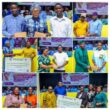
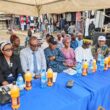


As part of efforts to strengthen the Education and Technology pillar of its T.H.E.M.E.S agenda, the Lagos State Government has distributed e-learning devices to students of the newly established Comprehensive Schools in Lagos State.
The e-learning devices were recently presented to students of Wahab Folawiyo Comprehensive High School, Ikoyi and Ogunmodede Comprehensive High, Epe in the Lagos State Education District III to provide easy access to all academic materials that aid their learning ability.
Speaking during the presentation, the Commissioner for Education, Mrs. Folasade Adefisayo, said the devices have been embedded with various learning materials, including pictures of the 100 most important people in the world, to inspire the students to greatness among other useful learning items.
The Commissioner, who was represented at the event by Mrs. Lucy Omoaka, Director, Comprehensive Schools, urged the beneficiaries of the learning devices to make good use of them to improve their academic and vocational performances.
The Tutor-General/Permanent Secretary of Education District III, Dr. Olufunke Oyetola, appreciated the State Government for the laudable initiative, saying that the device will further make learning attractive to students.
She disclosed that by September 2022, 50 more Comprehensive Schools would have been added to the existing ones across the State, urging the students to use the devices judiciously in addition to being good ambassadors so that the government can be encouraged to do more.
The TG/PS equally advised parents present at the presentation to encourage the students to use the devices for the desired purpose.
In another development, Dr. Oyetola commended students of Junior Secondary Schools presently writing Basic Education Certificate Examinations (BECE) as well as senior students writing WAEC at Lagos Island and Eti Osa zones for their conduct.
She spoke during a recent monitoring exercise to schools within the District to ensure that the examinations were conducted in a conducive and peaceful environment.
Some of the schools visited by the TG/PS and her team include Ireti and Falomo Junior High Schools, Osborne Schools Complex in Ikoyi, Epe Grammar School, Government College Ketu, Magbon Alade Community High School and Ibeju High School among others.


