




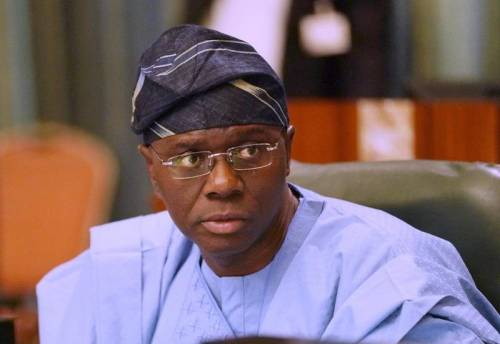
Lagos GAC okays Sanwo-Olu for second term

The dream of Lagos State Governor, Mr. Babajide Sanwo-Olu to get a second term in office got the seal of approval of the Governance Advisory Council (GAC) on Monday.

The dream of Lagos State Governor, Mr. Babajide Sanwo-Olu to get a second term in office got the seal of approval of the Governance Advisory Council (GAC) on Monday.

The GAC, the apex body within the state ruling political class of All Progressives Congress (APC) approved second term for Sanwo-Olu at its meeting this afternoon at State House, Marina.

With the APC governorship election primaries slated for May 27, the speculation on whether Sanwo-Olu will get a second term has become rife among the business and political elites in the state, especially members of the APC.

Governor Sanwo-Olu has not picked his nomination forms for the election apparently waiting for official endorsement of the party chieftains.

It would be recalled that his predecessor, Mr. Akinwumi Ambode failed to secure a second term in office because he fell out of favour with the party structure and GAC members despite the popular sentiments that he performed very well enough in office to deserve a second term.


Total
0
Shares
Related Posts
Read More

Big trouble looms for randy lecturers as Senate takes bold step

Under the new law, offenders found guilty of offences outlined in Clauses 4 (1), (2), and (3) face a jail term of not less than five years and up to fourteen years, without an option of a fine. Lesser offences specified under Clauses 4 (4), (5), and (6) attract imprisonment of between two and five years, also without the possibility of a fine. The bill also empowers victims to pursue civil action for breach of fiduciary duty, using the same standard of proof as in civil proceedings. It lists several prohibited acts, including demanding sexual favours, making unwelcome advances, engaging in unwanted physical contact, or inducing others to commit harassment. During deliberations, Senator Adams Oshiomhole (Edo North) urged lawmakers to consider expanding the bill’s coverage to include the workplace and other professional settings, arguing that sexual harassment is not confined to educational institutions. “There is no reason to restrict this legislation to students alone,” Oshiomhole said. “We should design a law with broader application that protects every Nigerian from harassment.” However, Deputy Senate President, Senator Jibrin Barau, who presided over the session, clarified that the bill, already passed by the House of Representatives, was limited to concurrence and that existing statutes already address sexual harassment in workplace contexts. Following the debate, the Senate unanimously adopted and passed the bill for third reading, marking a major victory for advocates of students’ rights and gender protection in Nigeria’s education system.