




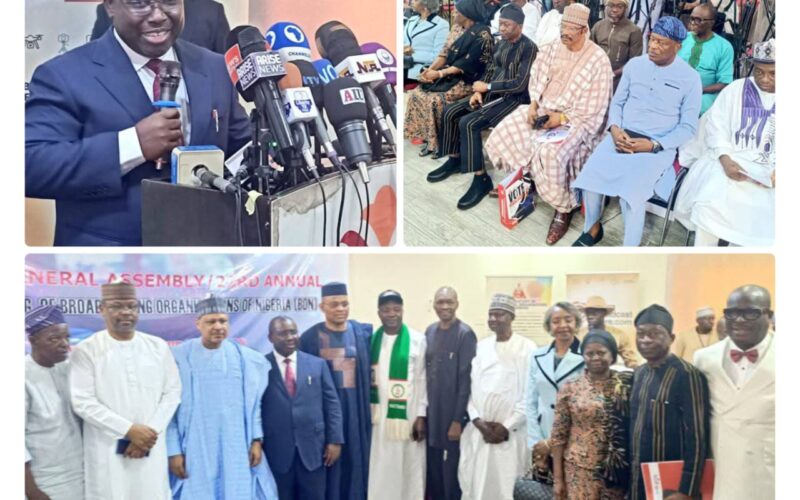
- The Chairman of the Independent National Electoral Commission, Prof. Joash Amupitan (SAN), has cautioned broadcast organisations against spreading misinformation, stressing that the credibility of the 2027 General Election will largely depend on how responsibly Nigeria’s airwaves are managed.
Speaking on April 8, 2026, at the 81st General Assembly of the Broadcasting Organisations of Nigeria, Amupitan described the information space as a key battleground in modern elections. He warned that false information amplified through unverified broadcasts now poses a greater threat than physical disruptions.
The INEC Chairman urged strict compliance with the Electoral Act 2026, particularly provisions on political broadcasting. He emphasised that all 22 registered political parties must be given equal access to media platforms, noting that fairness in airtime is a legal obligation, not a choice.
He also warned against the use of abusive, divisive, or inflammatory language capable of inciting ethnic or religious tensions, adding that irresponsible broadcasting could undermine national unity and disrupt the electoral process.
Amupitan reminded media houses of the mandatory 24-hour “cooling-off period” before Election Day, during which political campaigns and adverts are prohibited to allow voters make informed decisions without last-minute influence.
While acknowledging freedom of expression, he stressed that it must operate within the law, noting that the airwaves, as a public resource, demand responsibility and fairness from both regulators and operators.
Highlighting collaboration with the National Broadcasting Commission, he identified regulatory overlaps, enforcement gaps, and the rise of digital media as key challenges complicating effective monitoring.
He also raised concerns over incumbency advantage in state-owned media and the commercialisation of political airtime, warning that such practices could sideline smaller parties and weaken electoral fairness.
To address these issues, Amupitan called for stronger regulatory cooperation, clearer guidelines on equal access, improved fact-checking systems, and greater transparency in political advertising, including disclosure of sponsorship and pricing.
He urged broadcasters to prioritise truth over profit, verify information before dissemination, and actively combat fake news, while also mobilising citizens to participate in the electoral process.
Reaffirming INEC’s commitment to transparency, the Chairman advised media organisations to rely on the Commission’s official platforms for accurate electoral information.
He concluded that beyond logistics and technology, the integrity of Nigeria’s information environment will play a decisive role in determining the credibility of the 2027 General Election.